Nutritional Needs of Young Children:What are the key nutritional needs of young children aged 1 to 3 years?
Q: What are the key nutritional needs of young children aged 1 to 3 years?
A: Young children aged 1 to 3 years require balanced nutrition for rapid growth and development. According to the World Health Organization (WHO), they need energy-dense foods, adequate protein (13 g/day), fats (30-40% of total energy), and micronutrients like iron, zinc, calcium, and vitamins A, D, and C. The Dietary Guidelines for Americans 2020-2025 recommend 1-3 cups of vegetables, 1-1.5 cups of fruits, 3-5 oz of grains, and 2-4 oz of protein daily. Breastfeeding or fortified milk can continue up to age 3. Regular meals and snacks support their small stomach capacity and high energy demands.
Q: Why is iron particularly important in the diet of young children?
A: Iron is critical for young children because it supports cognitive development, immune function, and oxygen transport. The WHO reports that iron deficiency anemia affects nearly 40% of children under 5 in low-income countries, impairing motor and mental development. The American Academy of Pediatrics (AAP) recommends 7 mg/day of iron for children aged 1-3 years. Good sources include fortified cereals, red meat, poultry, beans, and spinach. Pairing iron-rich foods with vitamin C enhances absorption. The CDC advises screening for anemia at 12 months, as rapid growth depletes fetal iron stores by 4-6 months, necessitating dietary supplementation.
Q: How much fat do young children need in their diet?
A: Young children need a higher proportion of fat than adults to support brain development and energy needs. The WHO and UNICEF recommend that fat should provide 30-40% of total energy for children aged 1-3 years. The Dietary Guidelines for Americans 2020-2025 emphasize healthy fats from sources like avocados, nuts, seeds, and vegetable oils, while limiting saturated fats to less than 10% of calories. Low-fat diets are not recommended before age 2, as fats are essential for myelination and hormone production. After age 2, gradual reduction to 25-35% of calories is advised, but never below 20% to prevent nutrient deficiencies.
Q: What are the recommended daily servings of fruits and vegetables for toddlers?
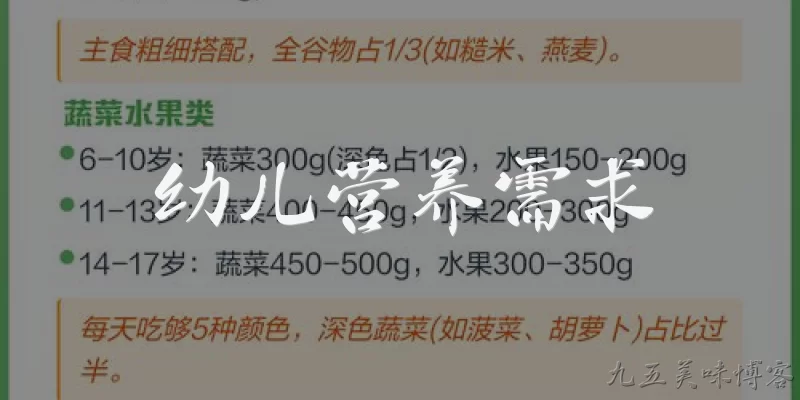
A: Toddlers aged 1-3 years should consume 1 to 1.5 cups of fruits and 1 to 2 cups of vegetables daily, according to the Dietary Guidelines for Americans 2020-2025. The WHO recommends at least 400 g (about 2.5 cups) of fruits and vegetables per day for children over 2, but for younger toddlers, smaller portions are appropriate. Variety is key: offer dark green, red, and orange vegetables, plus whole fruits rather than juice. The AAP advises avoiding juice before age 1 and limiting it to 4 oz/day for ages 1-3. Introducing diverse produce early helps establish healthy eating habits and provides essential fiber, vitamins, and minerals.
Q: How can parents ensure young children get enough calcium and vitamin D?
A: Calcium and vitamin D are vital for bone growth in young children. The WHO recommends 500 mg/day of calcium for children aged 1-3 years, while the AAP suggests 700 mg/day. Vitamin D is needed at 600 IU/day. Dairy products, fortified plant milks, and leafy greens provide calcium. Vitamin D comes from sunlight, fatty fish, and fortified foods. The CDC notes that many children fall short, so supplementation may be necessary, especially in winter or dark-skinned children. The AAP recommends 400 IU/day of vitamin D for all infants and 600 IU/day for older children. Regular pediatric check-ups can monitor levels and prevent rickets.
Dialogue about
Common scenarios of "Nutritional Needs of Young Children"
【Parent】 Hi Dr. Chen! I'm a bit worried about my 3-year-old's eating habits. She seems to be a picky eater and I'm not sure if she's getting enough nutrition.
【Pediatric Nutritionist】 Hello! It's common for young children to be picky eaters. The key is to ensure they get a balanced diet over time, not just in one meal. What does a typical day of meals look like for her?
【Parent】 She usually has milk and cereal for breakfast, but often skips lunch or just eats a few bites. Dinner is hit or miss. She loves fruits and snacks though.
【Pediatric Nutritionist】 I see. At this age, toddlers need about 1,000 to 1,400 calories a day, depending on activity level. It's important to offer a variety of foods from all food groups: fruits, vegetables, grains, protein, and dairy. Even if she doesn't eat much at one sitting, offering small, frequent meals and snacks can help.
【Parent】 How can I make sure she gets enough protein? She doesn't like meat much.
【Pediatric Nutritionist】 Protein can come from other sources like eggs, beans, lentils, yogurt, cheese, and even nut butters (if no allergy risk). You can also try blending meat into sauces or offering it in fun shapes. Aim for about 2-3 ounces of protein-rich foods per day for a 3-year-old.
【Parent】 What about vegetables? She refuses most of them.
【Pediatric Nutritionist】 Keep offering vegetables in different forms—raw, cooked, pureed into sauces, or mixed with foods she likes. It can take 10-15 exposures before a child accepts a new food. Also, model eating vegetables yourself. You can also involve her in grocery shopping and cooking to make it fun.
【Parent】 Should I give her a multivitamin? I've heard mixed things.
【Pediatric Nutritionist】 If she's eating a varied diet, she might not need one. But if you're concerned about specific nutrients like iron or vitamin D, consult your pediatrician. A standard children's multivitamin can be a safety net, but it shouldn't replace healthy foods.
【Parent】 She drinks a lot of milk—about 4 cups a day. Is that too much?
【Pediatric Nutritionist】 Yes, that might be too much. The recommendation for 2-3 year olds is about 2 cups of milk per day. Excessive milk can interfere with iron absorption and fill her up so she eats less solid food. Try to limit milk to 16-24 ounces and offer water instead.
【Parent】 What about snacks? She loves crackers and fruit, but I worry about too much sugar.
【Pediatric Nutritionist】 Fruit is great—it provides fiber and vitamins. For crackers, choose whole-grain options. Limit sugary snacks and drinks. Offer snacks like yogurt, cheese sticks, apple slices with peanut butter, or veggie sticks with hummus. Aim for 2-3 snacks a day.
【Parent】 How do I handle her tantrums when I offer new foods?
【Pediatric Nutritionist】 Stay calm and don't force. Offer the new food alongside familiar favorites without pressure. If she refuses, simply remove it and try again another day. Don't make a separate meal; she'll learn that what's served is what's available. Praise her when she tries new things.
【Parent】 Is it okay if she has some days where she barely eats?
【Pediatric Nutritionist】 Yes, that's normal. Toddlers' appetites fluctuate. Look at the overall week rather than daily intake. As long as she's growing well and has energy, she's likely fine. Trust her hunger cues.
【Parent】 What about iron? I've heard it's important.
【Pediatric Nutritionist】 Iron is crucial for brain development. Good sources include iron-fortified cereals, beans, lentils, spinach, and lean meats. Pair with vitamin C (like oranges or strawberries) to enhance absorption. If you're worried, ask your doctor about a blood test.
【Parent】 Thanks! Any final tips for picky eaters?
【Pediatric Nutritionist】 Keep mealtimes positive and routine. Offer a variety of foods, be patient, and don't stress. If you're ever concerned about her growth or nutrition, consult your pediatrician. You're doing great by seeking advice!