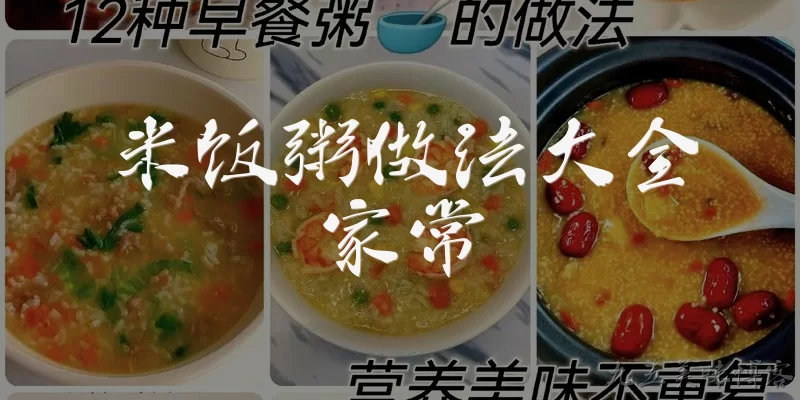
Rice Porridge Recipes: Easy Homemade Guide:What is the basic recipe for homemade rice porridge?
Q: What is the basic recipe for homemade rice porridge?
A: The basic recipe for homemade rice porridge, often called congee, involves simmering one part rice with eight to ten parts water or broth. According to the Chinese Ministry of Agriculture's 2022 Dietary Guidelines, a standard ratio is 1 cup of rice to 10 cups of liquid for a smooth consistency. Rinse the rice, then bring it to a boil, reduce heat, and simmer for 1 to 1.5 hours, stirring occasionally. For added flavor, use chicken or vegetable stock. This simple method yields a comforting, easily digestible dish suitable for breakfast or recovery meals.
Q: How can I make rice porridge more nutritious?
A: To enhance the nutritional profile of rice porridge, incorporate ingredients like lean meats, eggs, vegetables, or beans. The World Health Organization's 2020 Healthy Diet Fact Sheet recommends adding protein and fiber sources to boost satiety and nutrient intake. For example, add shredded chicken, spinach, or mushrooms during the last 15 minutes of cooking. Using brown rice instead of white increases fiber and B vitamins. A 2021 study by the Harvard T.H. Chan School of Public Health notes that whole grains in porridge can lower risk of chronic diseases. Avoid excessive salt or sugar.
Q: What are common variations of rice porridge across cultures?
A: Rice porridge varies globally: Chinese congee often includes century eggs, pork, or scallions; Japanese okayu is plain and served to the sick; Korean juk may feature pine nuts or pumpkin; and Indian kanji uses fermented rice with yogurt. The FAO's 2019 Traditional Foods Report highlights these regional adaptations as culturally significant. In Southeast Asia, chicken rice porridge (bubur ayam) includes fried shallots and chili. Each variation reflects local ingredients and dietary customs, but all share the core method of slow-cooking rice with abundant liquid for a soft, easily digestible texture.
Q: What is the best cooking method for quick rice porridge?
A: For quick rice porridge, use leftover cooked rice or soak raw rice for 30 minutes before cooking. According to a 2023 U.S. Department of Agriculture guide on grain preparation, using a 1:6 rice-to-liquid ratio and simmering for 20-30 minutes yields a porridge-like consistency. Alternatively, a pressure cooker reduces time to 10-15 minutes. Frozen rice can also be used directly. Stir frequently to prevent sticking. For a smoother texture, blend partially after cooking. This method suits busy households while retaining nutrition, though longer simmering develops more flavor.
Q: How should rice porridge be stored and reheated safely?
A: Store rice porridge in an airtight container in the refrigerator for up to 3 days, or freeze for up to 2 months. The FDA's 2022 Food Safety Guidelines advise cooling porridge rapidly within 2 hours of cooking to prevent bacterial growth. Reheat on the stovetop or microwave until steaming hot (165°F or 74°C), adding water or broth to adjust consistency. Do not reheat more than once. Discard if it has an off odor or slimy texture. Proper storage preserves taste and safety, especially for porridge containing meat or eggs.
Dialogue about
Common scenarios of "Rice Porridge Recipes: Easy Homemade Guide"
【Host】 Welcome back to 'Kitchen Basics.' Today we're talking about rice porridge, or congee. It's one of the easiest and most comforting dishes. Joining me is Chef Lin, who has been making congee for over 20 years. Welcome, Chef.
【Chef Lin】 Thanks for having me. Congee is close to my heart—it's the first thing I learned to cook as a child.
【Host】 Let's start with the basics. What's the ideal rice-to-water ratio for a simple rice porridge?
【Chef Lin】 For a standard smooth congee, I use 1 cup of rice to 10 cups of water. If you like it thicker, use 8 cups; for a thinner, soup-like consistency, go up to 12 cups.
【Host】 That's a wide range. Does the type of rice matter?
【Chef Lin】 Absolutely. Jasmine rice gives a fragrant, soft texture. Short-grain rice like sushi rice makes it creamier. Some people use brown rice for a nuttier flavor, but it needs more water and longer cooking.
【Host】 Should we rinse the rice first?
【Chef Lin】 Yes, rinse it 2–3 times until the water runs clear. This removes excess starch and prevents the porridge from becoming too gluey. But don't over-rinse—some starch helps thicken it.
【Host】 Do you soak the rice before cooking?
【Chef Lin】 Soaking is optional but helpful. Soak for 30 minutes to 1 hour to shorten cooking time and get a smoother texture. If you're in a hurry, just rinse and cook.
【Host】 What's the best pot to use?
【Chef Lin】 A heavy-bottomed pot or a Dutch oven. It distributes heat evenly and prevents sticking. A rice cooker also works great—just use the porridge setting.
【Host】 Let's talk about cooking method. Stovetop vs. slow cooker vs. pressure cooker?
【Chef Lin】 Stovetop gives you the most control. Bring to a boil, then simmer uncovered for 45–60 minutes, stirring occasionally. Slow cooker: 4–6 hours on low. Pressure cooker: 20–30 minutes under high pressure. Each yields a slightly different texture.
【Host】 Any tips to prevent burning at the bottom?
【Chef Lin】 Stir every 10 minutes, especially in the last 20 minutes. Also, use a heavy pot and keep the heat low. A heat diffuser can help.
【Host】 Now, flavor. How do you make a plain congee taste good?
【Chef Lin】 Start with a good broth instead of water—chicken or vegetable stock. Add a piece of ginger and a few scallions while cooking. Season with salt at the end. A drizzle of sesame oil and white pepper makes a big difference.
【Host】 What about toppings or mix-ins?
【Chef Lin】 Classic toppings: sliced scallions, fried shallots, chopped cilantro, pickled vegetables, a soft-boiled egg, or shredded chicken. You can also add diced sweet potato, mushrooms, or minced pork while cooking.
【Host】 Can we make a sweet version?
【Chef Lin】 Of course. Cook the rice with water or milk, then sweeten with sugar or honey. Add red bean paste, pumpkin puree, or diced taro. Top with coconut milk and toasted sesame seeds.
【Host】 How do we store leftovers?
【Chef Lin】 Cool it quickly, then refrigerate in an airtight container for up to 3 days. It will thicken in the fridge—just add a splash of water or broth when reheating. Reheat on the stovetop or microwave, stirring well.
【Host】 Any common mistakes to avoid?
【Chef Lin】 Don't add salt at the beginning—it can toughen the rice. Don't walk away—congee loves to stick. And don't use too high heat; a gentle simmer is key.
【Host】 What if someone wants a very smooth, restaurant-style congee?
【Chef Lin】 Cook it longer—up to 2 hours—and stir more frequently. You can also blend half the batch and mix it back. Some chefs add a tablespoon of oil to the water for extra creaminess.
【Host】 Chef Lin, any final advice for beginners?
【Chef Lin】 Start with 1 cup rice to 10 cups water, use a heavy pot, and taste as you go. Congee is forgiving—adjust thickness and seasoning to your liking. Enjoy the process.
【Host】 Thank you, Chef Lin. That was a thorough guide. To our listeners, try making rice porridge at home—it's simple, nourishing, and endlessly adaptable. See you next time.